What is Digital Signage?
The complete guide to understanding digital signage — what it is, how it works, who uses it and why it delivers results.
The power of dynamic content
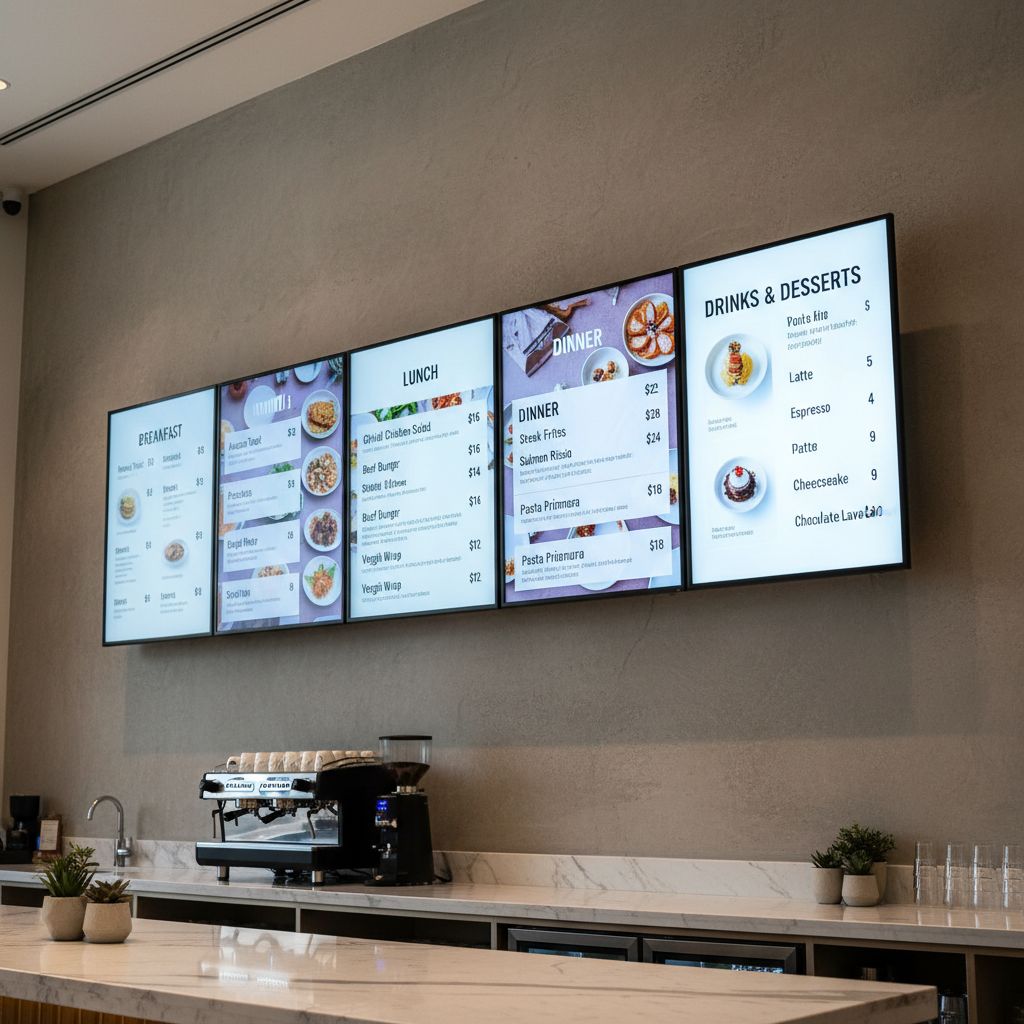
Digital signage is the use of digital screens to present dynamic content in public or private spaces. Unlike printed posters or static banners, digital signage can be updated instantly, scheduled automatically and tailored to specific audiences or times of day.
A digital signage system typically consists of three core components: a display screen, a media player that drives the content, and content management software (CMS) that allows you to control what is shown, when, and where.
Content can range from simple images and videos to live data feeds, social media walls, weather updates, interactive touchscreens and wayfinding maps — giving businesses an incredibly flexible communications tool.
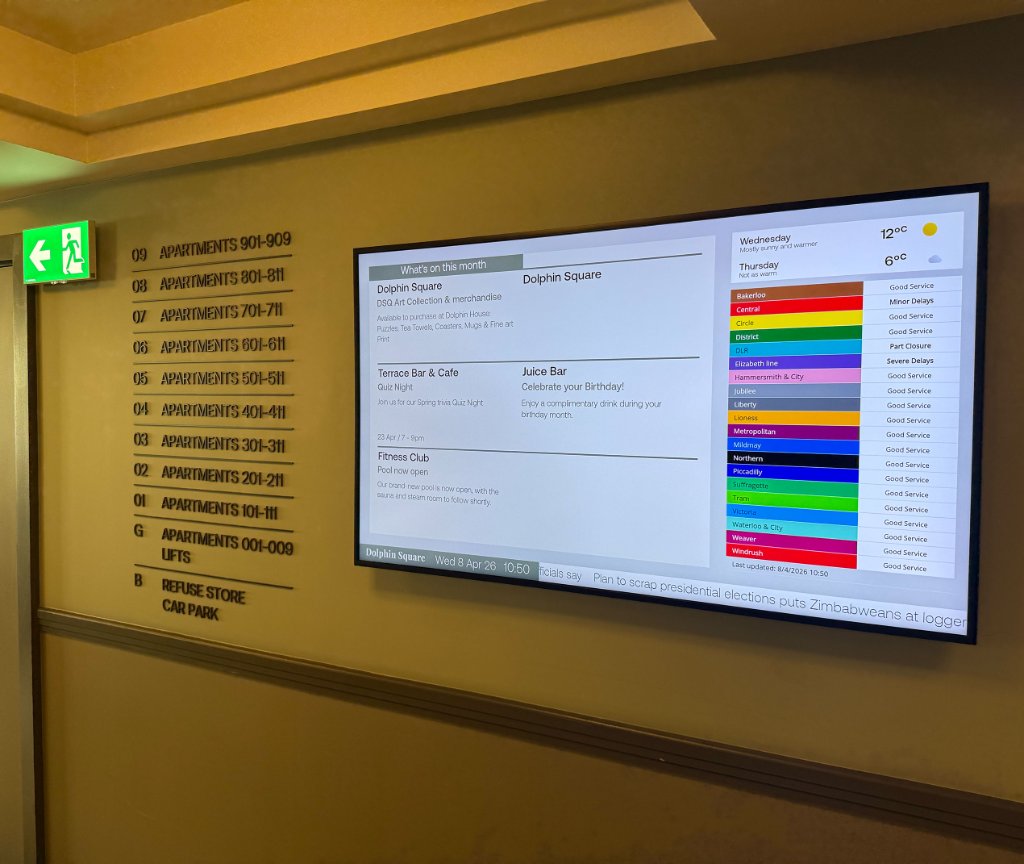
Remote. Instant. Impactful.
Why digital signage works
Here's what the industry reports about the impact of digital signage. Figures marked as an industry estimate come from editorial industry reporting rather than a measured survey.
increase in message recall for Corporate Communications using digital signage versus traditional static displays
average return on investment for Quick Service Restaurants using digital signage, with an 11-month payback period
reduction in printed materials costs reported by Healthcare organisations after deploying digital signage networks
saved per week on average by teams who switch from printed notices to a cloud-managed digital signage network
Source: Sixteen:Nineof digital signage deployments now use cloud-based CMS, vs just 22% on-premise
Who uses digital signage?
Digital signage spans virtually every sector. Here are some of the most common industries and how they put it to work.
Retail
Dynamic promotions, wayfinding, and interactive product displays that drive impulse purchases and enhance the shopper experience.
- Promotional video walls
- Queue management displays
- Interactive product kiosks
- Window-facing screens
Hospitality & Food Service
Digital menus, ambiance screens and promotional displays that reduce perceived wait times and upsell effectively.
- Digital menu boards
- Self-order kiosks
- Table-side displays
- Hotel lobby screens
Corporate
Internal communications, visitor management and meeting room signage that keeps employees informed and spaces running smoothly.
- Lobby welcome displays
- Meeting room booking screens
- KPI dashboards
- Employee news boards
Education
Campus wayfinding, timetable displays and notice boards that replace outdated printed materials across schools and universities.
- Timetable screens
- Campus maps & wayfinding
- Emergency alert systems
- Student notice boards
Healthcare
Patient information screens, wayfinding and queue management that reduce anxiety and improve the overall care experience.
- Waiting room entertainment
- Appointment queue displays
- Wayfinding totems
- Health & safety messaging
Transport & Public Spaces
Real-time travel information, advertising and safety messaging across stations, airports and transit networks.
- Departure/arrival boards
- Platform information screens
- Digital advertising panels
- Emergency broadcasts
Leisure & Entertainment
Immersive displays, event information and wayfinding that elevate guest experiences in venues, stadiums and attractions.
- Stadium scoreboards
- Venue event listings
- Attraction wayfinding
- Digital art installations
Digital signage FAQs
The questions we are asked most often at the start of a project.
What exactly is digital signage?
Digital signage is one or more screens showing content you control remotely: promotions, menus, wayfinding, announcements or live data. A typical system is a commercial display, a media player that drives it, and content management software that decides what plays where and when. You update it from a browser, without touching the screens.
How much does a digital signage setup cost?
It depends on the screen size and type, whether you need a separate media player, mounting or an enclosure, installation, and any ongoing software subscription. A single-screen installation is a modest one-off cost; a multi-screen or LED network scales with the number of displays. We price each project individually, so tell us about your space and what you need it to do.
Do I need Wi-Fi or an internet connection?
Not always. Screens can play content stored locally on the player and update over your own network, which suits sites with no guest internet or tight security. A cloud-managed system needs an internet connection so content can be scheduled and changed remotely. We plan around whichever fits your site.
How long does installation take?
A single screen is usually installed and configured in a day. Multi-screen networks, video walls and LED installations take longer because of structure, power and cable routes. We survey the site first and give you a clear schedule before any work starts.
Can our own team update the content?
Yes, and we set it up that way. We build the templates, hand over the logins and train your team so daily content changes are yours to make. If you would rather not manage it, we can run the content for you and keep it fresh on a schedule.
Do you cover the whole of the UK?
Yes. Eclipse Digital Media supplies, installs and supports digital signage across the UK, from a single screen in one room to coordinated networks across multiple sites.
Ready to get started?
Eclipse Digital Media has delivered digital signage solutions across the UK for over a decade. Talk to our team to find out what's right for you.
Get in touchOur services
Hardware, software, installation, training, content and support, delivered end to end.
Solutions by sector
How digital signage is put to work in retail, hospitality, corporate, education and healthcare.
Shop screens & hardware
Browse commercial displays and mounting hardware, and preview a screen at its true size in your own space.